
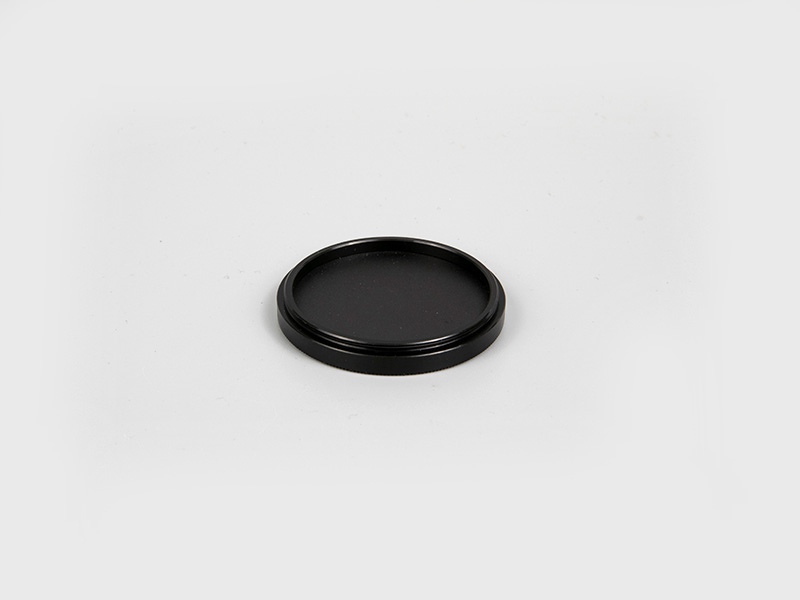
2" Dark Frame Filter

2" Dark Frame Filter

The 2" Astronomic Dark Filter is essential for a CCD camera that doesn't have a mechanical shutter. This filter allows you to take dark frames without the hassle of monitoring your set up. The filter is opaque and threaded in a 2" cell. This filter works even better with a filter wheel. Attach this filter to a filter wheel in order to take a dark frame without capping off your telescope.


The Astronomic Dark Frame filter is a must-have for many cameras that don't have a mechanical shutter, including interline CCD cameras from Starlight Xpress, Imaging Source, Atik, as well as others.


Comments

Popular posts from this blog

Off-Axis Guider for Astrophotography

  Off-Axis Guider for Astrophotography Delightfully thin off-axis guider ideal for use with Newtonian reflector telescopes and DSLR cameras Lets you guide and capture astrophotos simultaneously through one telescope. No guide scope required! 10.5mm thickness perfect for use with Newtonian reflectors which have limited back focus travel Will not interfere with the use of coma correctors thanks to its thin profile Compensates for any existing flexures that may interfere with accurate guiding and tracking

Guide Star Dovetail Mounting Plate

 Guide Star Dovetail Mounting Plate + Tube Rings for Telescope Short Type • Provides a platform for coupling telescope optical tubes to Atlas equatorial (EQ) telescope mounts. • Attach telescope tube rings to the dovetail mounting plate for easy, no-tools attachment of the telescope to an EQ mount. • 3.81 inch Length plate is especially useful for short focal length refractor telescopes. • Made of anodized aluminum. • Includes 1x dovetail mounting plate, 2x screws.  

Classification and working principle of telescope

 In a broad sense, telescopes include not only optical telescopes operating in the visible light band, but also radio, infrared, ultraviolet, X-ray, and even gamma-ray telescopes. We are limited to optical telescopes. In 1609, Galileo produced the first telescope. It has a history of nearly four hundred years. During this period, it has experienced a major leap. According to the type of objective lens, it can be divided into three types: 1. Refracting telescope The objective lens of a refracting telescope is composed of a lens or lens group. The early objective lens was a monolithic structure, with serious chromatic aberration and spherical aberration, which made the celestial bodies viewed with colored spots. In order to reduce chromatic aberration, people desperately increased the focal length of the objective lens. In 1673, J. Hevelius built a 46-meter-long telescope. The entire lens barrel was hoisted on a 30-meter-high mast, requiring multiple people to pull it with a rope. Mo...